ServicesWindshield Protection Film
Windshield Protection Film in Folsom
A thin, optically clear film applied to the outside of your windshield takes the impact from gravel and road debris. When it gets pitted, we swap the film and the glass stays. We check your windshield first and tell you honestly whether film is the right next step.
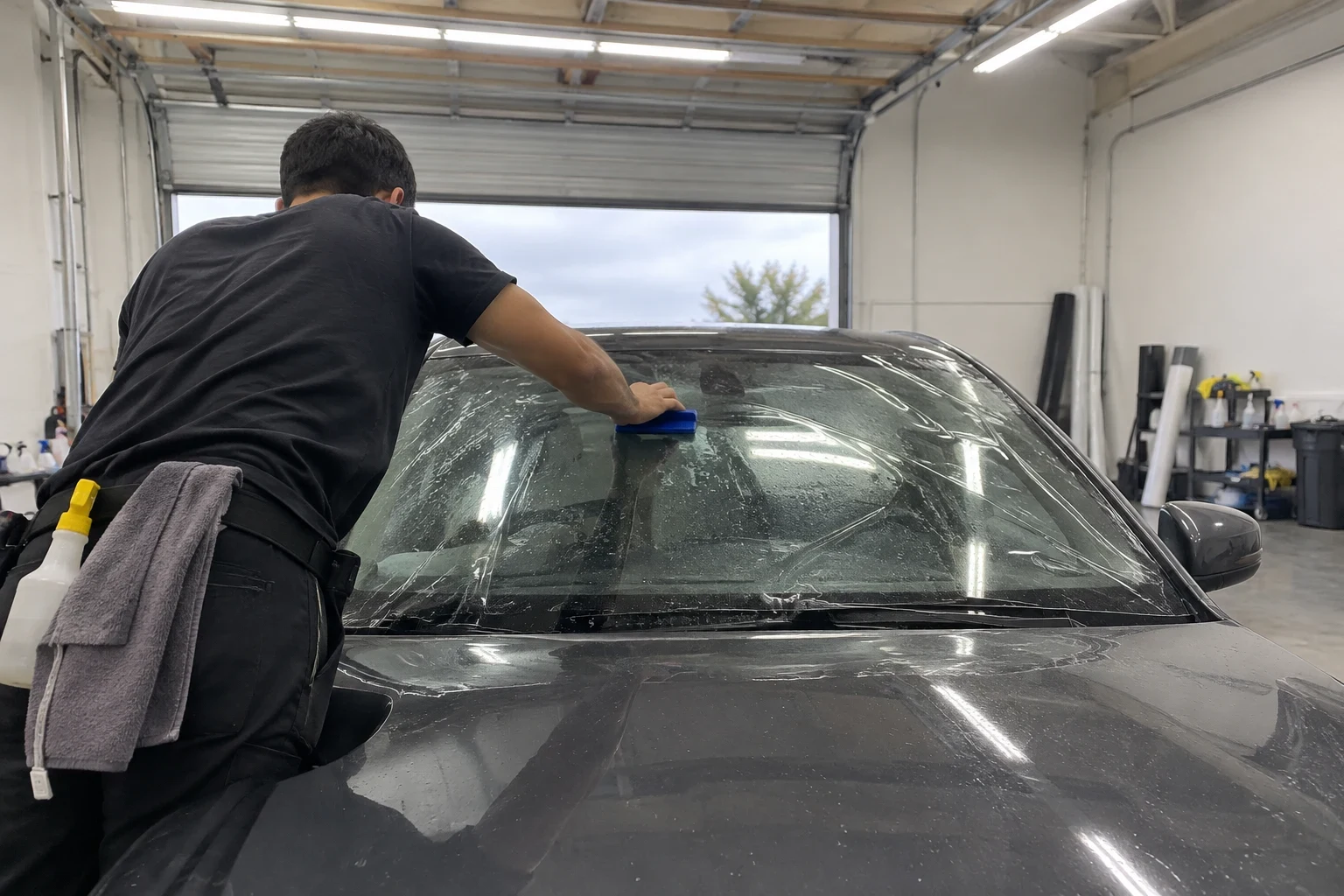
A sacrificial layer that keeps chips off the glass
Windshield protection film is a clear polyurethane-based film applied to the exterior of the windshield. When a stone hits, the film flexes and spreads the energy across a wider area, so a strike that would have left a star break in bare glass often leaves only a mark in the film. It is not tint. It adds no shade and is made to stay clear for driving, day and night.
The reason we offer it comes down to repair versus replacement. A modern windshield is more than glass. Many carry a lane-keeping camera, a rain sensor or a heated wiper zone, and a new windshield can mean a camera recalibration on top of the glass itself. Renewing a worn sheet of film is a far smaller job. If your commute puts you behind gravel trucks at freeway speed, that difference adds up quickly.
Our shop has been in business for 6 years, and our lead installer has 15 years of experience cutting and fitting film on curved glass.
What the install includes
Glass inspection comes first
We look over the windshield under good light for chips, pits and short cracks. Film over an open chip traps dirt and moisture and can hide a break that keeps spreading, so we point out anything that needs attention ahead of the install.
Full decontamination of the glass
We wash the windshield, then clay and polish it to remove embedded contaminants, old wax and wiper residue. The adhesive needs bare, clean glass to grip evenly and stay clear.
Film shaped for your model
We work from a pattern matched to your car's year and model, then trim by hand so the edges sit just inside the glass border. That small margin keeps the edge from lifting under the wipers or at the black frit band.
Heat-formed fit around the curve
Windshields curve in two directions. We wet-apply the film, then heat-shrink and squeegee it so it lies flat across the whole surface without fingers or creases.
Camera and sensor zone check
If your car has a forward camera or rain sensor behind the glass, we check how the film sits over that area and talk with you about it while planning the install.
Aftercare walkthrough at pickup
We explain what the curing haze looks like, how long to wait until the first car wash, and which wiper and cleaning habits keep the film clear longer.
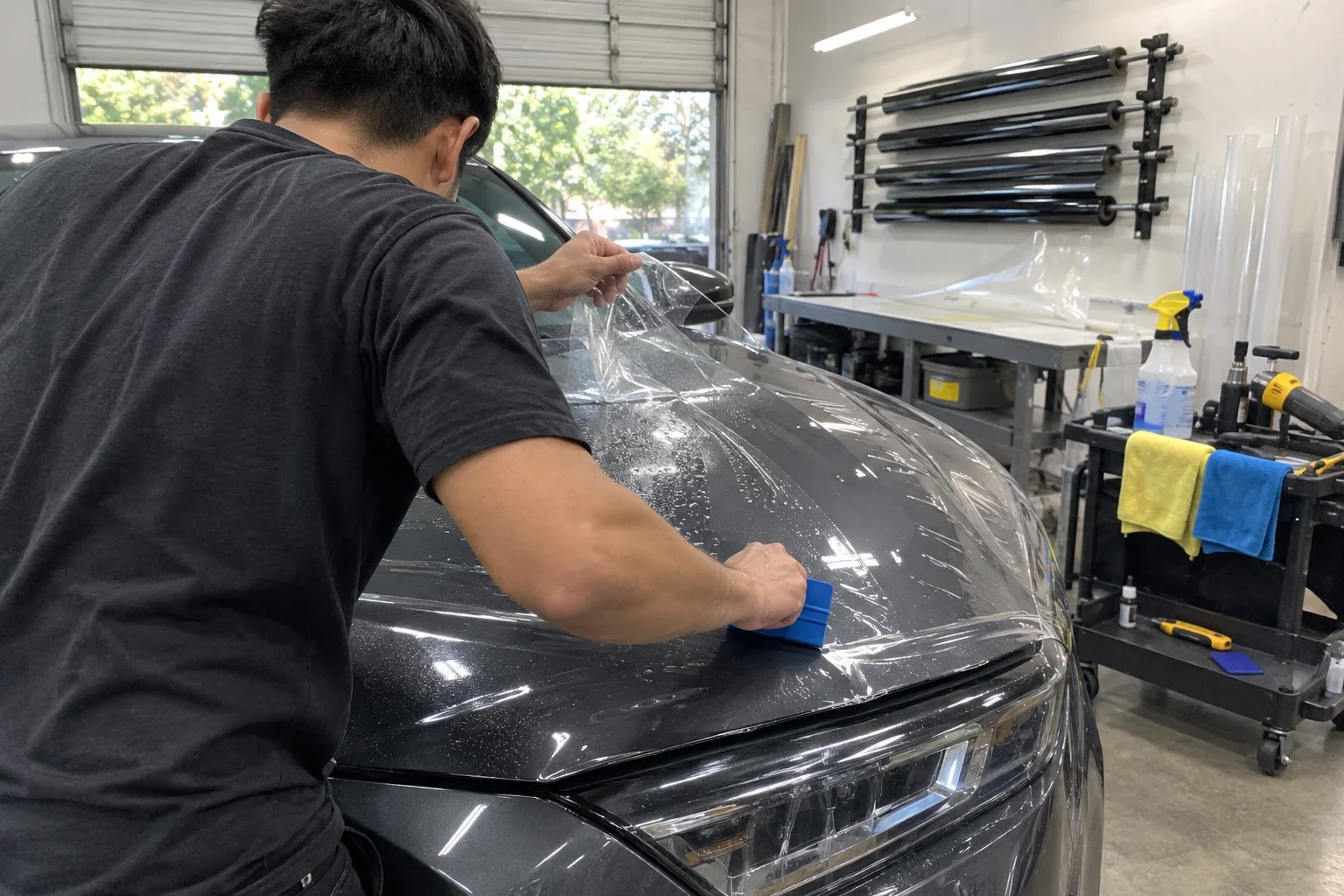
Signs windshield film makes sense for your car
- You've already paid for one windshield
- If a rock has cost you one windshield, the same commute will likely do it again. A fresh sheet of film costs far less than new glass.
- Your car has driver-assist cameras
- Glass with a mounted camera often needs a recalibration after it's swapped. Protecting the original glass avoids that step.
- The windshield is new and still clean
- Film works best on glass that hasn't been pitted yet. A new car or a freshly installed windshield is the ideal starting point.
- You drive behind trucks or on freeways often
- Highway speeds and trucks shedding gravel are the main source of chips. More freeway miles means more strikes.
- You see sandblast pitting in low sun
- Fine pitting scatters light and causes glare at sunrise and sunset. Film won't undo existing pitting, but it stops new wear. Heavily pitted glass may be better off with a new windshield first, and we'll tell you if that's the case.
How the job runs
- 1
Phone consultation
Tell us your car's year, make and model and how it's driven. We explain the film, ask about any chips you've noticed and set a drop-off time at the shop.
- 2
Inspection at drop-off
We look over the glass with you there. If there's a chip that should be resin-filled by a glass shop first, or a crack that means replacement, we say so and hold off on cutting any film.
- 3
Prep and install
The windshield is decontaminated, the film is cut and wet-applied, then heat-formed and squeegeed until it lies flat edge to edge. Most of the time goes into the prep.
- 4
Cure and pickup
Some light haze or small water pockets can show for a few days as the moisture under the film evaporates. That's normal, and warm Folsom weather usually speeds it up. We go over the aftercare before you drive away.
What moves the price
Windshield film is priced per vehicle, not by the foot. The size and shape of the glass matter most, followed by what's mounted on it and the condition it's in. We give you a quote by phone once we know the car, and confirm it after we see the glass.
- Size and curvature
- A large, steeply raked windshield on a van, truck or sports car takes more film and more heat-forming time than a small, flat one.
- Cameras and sensors
- A busy sensor area behind the mirror takes more care to fit cleanly, and that time is part of the job.
- Condition of the glass
- Existing chips may need a repair at a glass shop first. Heavy pitting may change the recommendation entirely.
- Renewing the film later
- Film is a wear item. Wiper passes and repeated strikes wear it down over time, and the cost of a fresh sheet is what you weigh against a new windshield.
Windshield protection film questions
- Is windshield protection film legal in California?
- California limits tint on the windshield to a non-reflective strip along the top. Windshield protection film is a clear film made to protect the glass, not to shade it. We go over how it looks on your glass during the consultation so you know exactly what you're getting.
- Can you put film over a chip I already have?
- We don't recommend it. Film sealed over an open chip can trap moisture and dirt, and the break can keep spreading underneath. Have the chip resin-filled at a glass shop first, then bring the car in for film.
- Will it affect my wipers or night visibility?
- The film is optically clear and the wipers run on it like glass. We'll walk you through which washer fluids and wiper habits keep the surface clear longer. If your wiper blades are worn, swap them out first, since a hard edge wears film faster.
- Does it work with lane-keeping and rain sensors?
- In most cases the camera and sensors work through the film. We check the sensor area on your car before installing and talk it through with you if anything looks unusual.
- What happens when the film gets worn or chipped?
- We peel the old film, clean the glass and install a new sheet. That's the point of it: the film takes the damage and gets replaced, and the windshield stays. We'll tell you plainly when a sheet still has life left and when it's time.
- Should I add paint protection film or window tint at the same time?
- Many customers pair windshield film with paint protection film on the hood and bumper, since the same debris hits both. Window tint on the side and rear glass handles heat rejection and UV protection. We can plan the work together so the car comes in once.
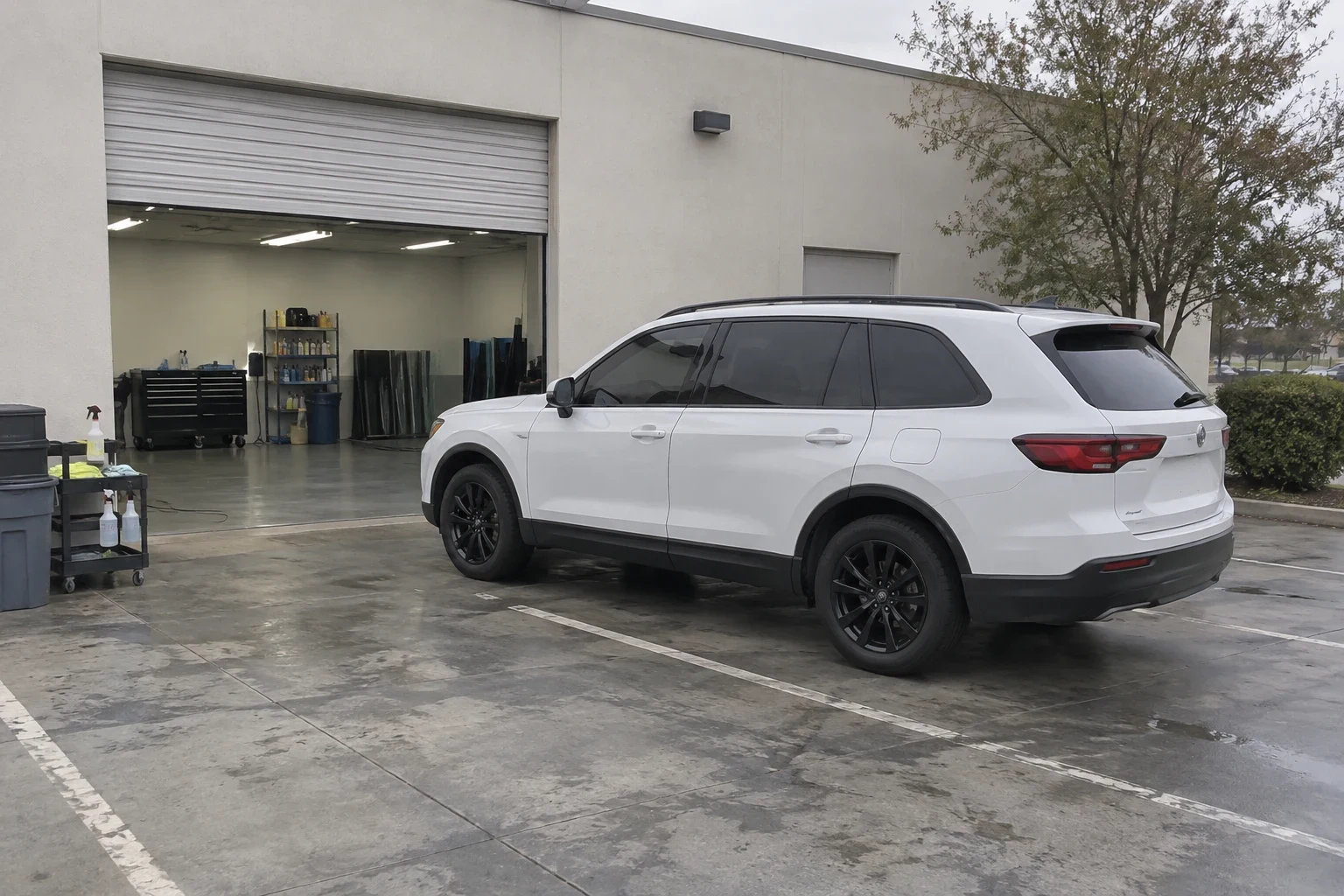
Protect the windshield you already have
Tell us about your car and the glass on it. We'll let you know whether film is the right move now or whether something should be handled first.